Monday, 26 November 2012

Advisors

Advisors

-- Are people you need to help advance your company's success
-- Founders fail when they believe their visions are facts
-- Listening to experienced advice can help you sort out whether your vision is a hallucination
-- Getting an advisory board (by expanding your circle of accumulated wisdom past their investors) is so important that it's an explicit step in the Customer Development process.

Teachers, Coaches, Mentors-- Advance your personal career

--  If you want to learn a specific subject find a teacher
-- If you want to hone specific skilld or reach an exact goal hire a coach
-- If you want to get smarter and better over your career find someone who cares about you enough to be a mentor.

Wednesday, 21 November 2012

Key Resources

What are the most important assets required to make the business model work?
Do you need finance, physical objects, intellectual property or also human resources?

All these resources are what you need to focus on to bring your value proposition into reality. 


Physical Resources 

--how will you acquire all your physical resources


  • Company Facilities

-- You will also need office space and a company location. It is important to know where and how you will acquire it.

  • Products/Services

--This is where you need to figure out where you will get a hold of your suppliers who will supply materials such as iron ore or warehouse space.

Financial Resources 

-- how will you get the money to get your business off the ground.


  • Friends, Family, Crowd-Fundraising

--Sometimes it does not require much money to start your business and through these people you can easily get money to start your business.

  • Venture Capital, Corporate Partners, Government Grants

--If your business requires millions of dollars to start then you can acquire money from investors or government grants from your country.

  • Lease-lines, Factoring, Vendor-financing

--Once you have made some revenue you can get loans from bank and financing from vendor who want to sell to you although you do not have the money.

Tuesday, 20 November 2012

Start-up Partner Strategies


When it comes to start-up partnership, here are a few key strategies that will get you off on the right foot.

  • Recognize you are not a peer to a large partner

--To a large partner you cannot expect to be seen as an equal or on equal footing so get used to that.

  • Don't confuse partners for early extremist buyer VS. mainstream buyers

--Do not confuse you your partners as a representation that the mainstream customer is starting to catch on to you business value proposition.

  • Don't confuse big company partnering with start-up strategy

--You do not always need a large business partner when you are just starting up. Sometimes you just need a small business perspective to get your business off on a running start.

  • Find partners that give YOU a competitive edge

--Find partners that are willing to give your the advantage. These people are the people that actually have an interest in your business and want you to succeed.

  • When finding partners, treat it as dating, and see what is right for you

-- Be picky when you find partners. Also, you need to find someone who has a personality and a set of skills that you do not have and can fill you hole. 


Monday, 19 November 2012

Risks to Having a Partner

One of the biggest partnership disaster was the building of the Boeing 787. They decided to have different parts made in countries all around the world. They ignored the engineers when they said that the parts need years of experienced people to make. In turn, many difficulties came up and it slowed the building process by a couple of years. Not all partnerships are prosperous. This partnership made by Boeing was made by accountants and not by technical staff.

Managing partners are very important because there are some partnerships that just don't work out. When you look for a partner you need to find someone that will bring something to the table. You need to ask yourself how they can help you and how you can help them.

The problem with some partners is an argument between decisions. You need to know who is in ownership of the customer. It is hard to keep the power in balance. Another issue is having a committee or multiple people running the business. This makes it even more difficult to decide on a certain matter since not everyone will have the same objectives, and when heads butt, that is when a business crumbles.

Try Something New

An important part to being successful is to do something that nobody else has ever done.

Take the story of David and Goliath for example. David did not follow the rules of Goliath and fight with body armour and a sword. He tried something different and used a sling and stone. He implemented an idea that nobody has used before. This is what made him successful. 

Statistics show that in the history of mankind the underdogs have won 30% of the time, and out of the 30% who have won, 65% of these underdogs won by implementing a new strategy or method.

Sir Francis Bacon once said " If we are expected to achieve results never before accomplished, we should expect to employ methods never before used."

How to relate this into your business is that as a start-up you will always be the underdog if you are doing something everyone else is doing. There will always be someone who can do it better than you. This is why you should do something never done before. There is no competition when it comes to an idea nobody has every thought of before. 

Thursday, 15 November 2012

Key Suppliers

Its is very important to have key partners that with supply you with the goofs you need. There a two types of suppliers:

Outsource Suppliers
- These are suppliers that supply manufactured goods such as supply chairs, and back office supplies.

Direct Suppliers
-These are suppliers that will ship you raw materials and components for the manufactured goods.


Monday, 5 November 2012

Key Partners and Suppliers

When it comes to a business partners and suppliers are the key to thriving. As a start-up, you might not be recognized at first by other companies because in their eyes, you are nothing but a spec.

Why Have Partners?


Faster time to market and New market

When you partner with a company you have access to there whole market and their customers. In turn you have a faster distribution.

Broader product offering

 The company you partner with also have products and while they are experts with that product you can incorporate it with your product to make a more broader product.

More efficient use of capital

 Why spend your own money doing something that another company is good at? When you partner with them they can more efficiently use their own money to give you the best service.

Unqiue customer knowledge or expertise

 With partners comes a new customer. These companies know there customers well and with this you learn more about a borader spectrum of customers.

Tuesday, 30 October 2012

Pricing model

 Pricing is a tactic, but not part of your revenue model. It is also a mistake to price your product based on how much it cost or to base your pricing to be lower than your competitors.

Pricing Model

You need to know what value are customers willing to pay for your product. Then you need to find out how they will pay for your product and how much they are currently paying.

Asset Sale

This refers to the sale of product to a physical market. For example, this can refer to this can be Ford or Walmart where you sell your assets for a profit.

Usage Fee

This refers to companies such as Telus or amazon where you pay everytime you use a service or product.

Subscription Fee

This is a fee where you are charged a month to have access to a service or product.

Renting

Renting refers to money that is made from lending your product or service.

Advertising fee

This is an example of companies such as Google where people may use for free, however companies will pay Google to advertise there company to the users.

Thursday, 25 October 2012

Robert Herjavec

 
Robert Herjavec is a Canadian businessman, investor, and television personality. Herjavec was born in Varaždin, Croatia and immigrated with his family to Canada at the age of eight to escape communism in his home country. His family came with only 20 dollars and a suitcase. He attended New College at the University of Toronto, and began his business career with IBM mainframe sales. In 1990 he founded BRAK Systems, which soon became Canada's top provider of Internet security software. BRAK Systems was sold to AT&T in 2000 for $100 million, and Herjavec took a position there as VP of Internet Security. He subsequently became VP of Sales at RAMP Networks, which was later sold to Nokia for $225 million. In 2003, Herjavec founded The Herjavec Group, a security software company, of which he is presently the CEO. It is now recognized as the fastest growing technology company in Canada. Herjavec has also written the book “Driven” which has stayed on the bestseller list for over 8 months, and became one of the best-selling books in Canada. Herjavec is also in one of the leading roles on the TV shows Dragons Den and Sharks Tank. On his free time he enjoys running in marathons, golfing and motor racing.

Tuesday, 23 October 2012

Keeping customers and growing them

It is much more costly to get customers than to keep them. However, keeping customers can increase revenue multiple times over. For example, if you keep your customers for 20 months, compared to if you spent the extra time to keep your customer for 100 months. You have just increased your revenue stream 5 times and that is very significant.

Next you need to grow your customers, and this includes up-selling etc. This way your customer that you have kept will grow and spend more money on your business while being satisfied.

Finally what is most important is that you find your Lifetime Value (LTV). Your LTV is how much money you can get from your customer in a lifetime. This lifetime does not refer to your lifetime, but the estimated time you believe your customer will stay with your business. Your customer acquisition cost (CAC) is the amount of money it takes to acquire and keep your customers. You want your LTV to be larger than your CAC. That is how your business stays in business and the larger the LTV is to your CAC the more interested investors will be.

Monday, 15 October 2012

How do you get your product to your customer?

There are two different things your product can be. It can be either a virtual product on the web or a physical product. Then there is the direct and indirect channel. The direct channel means you go face-to-face with your customer and indirect means that you will go sell your product to customers without ever meeting them.

Web Distribution Channels

There are several channels that you can bring your product to your customer via the web. You can have a website or make an app. You could sell your product on Amazon or eBay. Another tool you can use is facebook and twitter.


Physical Distribution Channel

Another form of distribution is physical. You could sell your computer chips to companies such as Apple and utilize their marketing to sell you product. You can also resell products at a higher value. Another way is with a direct sales force. This way you can have sales representative sell your product for you. You can also use the web to get to your custoemrs as well. Finally you can sell your product to retailers and have them sell it for you.

Tuesday, 2 October 2012

Multi-Sided Market

Sometimes, many different customers are part of your customer segments. For example, google search have web users and advertisers as customers. When you have a 2-sided customer segment then you need a two-sided business model that include value proposition and etc. for both customer segments.

When you have a two-sided market, each segment has a value proposition and a revenue stream, but one cannot survive without the other.

Monday, 1 October 2012

Customers

Customer Segments
The customer is who you are biulding your business for. You need to see what you are solving and who you are solving it for. By the end of this, you need to have a personna of who your customer is, who they are, and what they do.

First of all, you guess who your customer is and then go outside of the building to see if they are who you thought they were. You may realize that your customers are actually someone else, or that your customers were who you thought they were, but your product features do not match up.


Customer Gains
You need to make a list of what the customer gains from your product such as: savings, feature, happiness etc.

Customer Pains

You also need to figure out your customer problems and pains are. You also need to know there ranking of pains. You need to get to know your customer's top 10 pains and try to solve them.

Thursday, 27 September 2012

Minimum Viable Product

The MVP is a product or service you are building in your first instance that is delivered to customers.
The MVP tests the ability of the product to meet minimal customer needs. A MVP is not a minimal product, it is the activation of your product.

Wednesday, 26 September 2012

Ranking Painkillers

Painkillers are things that solve a customer's pain. They solve a customer's problem or need.
Now how we rank pains are accroding to INTENSITY and FREQUENCY.
Intensity means whether if the pain is lifethreatening or just something you can deal with.
Frequency refers to how often a problem or need is not met. How often does that pain reoccur.

Monday, 24 September 2012

Value Proposition

The value proposition of a product is what we offer to a customer that satisfies their need or problem. Although you may think your idea is the best thing since sliced bread, if your value proposition does not solve a customer's needs or problems then you have failed. In turn, you have to go outside of the building and ask your customers what they want or need. You need to figure out what your customer's pain is and a gain is when you have solved a that problem.

Market Size


When it comes to starting a business, your available market size is key. The larger the portion of the market you company serves, the more customers you will potentially have. Here are four questions you need to ask about your business to see if it has a high served available market.

Market Size Questions:

How big can this market be?

How much of it can we get?

What is the growth rate?

Is the market structure mature or in flux?

Friday, 21 September 2012

Customer Discovery

If you do not understand your customer and their needs then your business will not be able to thrive. Your customers need to be begging for your product or service because you are solving their problem.

Here are the four phases of customer discovery.

1. State Your Hypothesis-Your hypothesis is basicly a guess of what your business is based on. You are guessing the customer's need and your solution to it.

2. Test the Problem- Here you must test your customer's need or problem.

3. Test the solution- When you have validated the problem, then you must test your solution to your customer's problem.

4. Verify or pivot- Now If you haved verified your solution you are ready to go to the next step. However if you realized you have been mistaken then you can pivot and change your hypothesis.


The great part about this procedure is that if you realized you are wrong or have failed during any phases you can easily return and restart at phase 1 with little trouble.

Wednesday, 19 September 2012

What is a company? A start-up?

Many people know what a company is and what it does, but do we know exactly what it is defined as.
A company is a business that sells a product or service in exchange for revenue/profit.

Now what is a start-up? People who have done several start-ups in there life do not know what a   start-up is.
A start-up is a temporary organization designed to search for a repeatable and scalable business model. If your start-up is not scalable then do not put too much time into it. You want to make money from your business, if you are not-leave it behind.

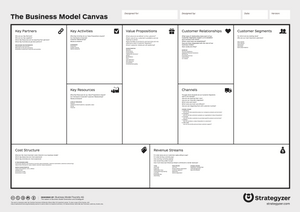
Now what is a business model? It is a canvas that organizations use to search and learn about a plan for your start-up. Business Models creates value for itself.
 

Why do most startups fail?

There are four main reasons why start-ups fail:

1. Cofounders fight- A quarter of start-ups fail because cofounders have trouble coming to a agreement.

2. They can't build their inital speculation- The initial vision is just to far ahead to achieve in a small time.

3. No one will fund the idea- The business does not have the funding need to carry out it's plan.

4. Nobody buys your product- Mabye your company does not meet the customer's need and it does not make enough money.